

‘Metroland – Engineering, Economy & Social Change 1863-2026’ by Dr Mark Pegg
December 8 @ 6:00 pm - 7:30 pm
Image Credit: Lecturer’s copyright
This event is both an in-person and on-line event. No need to register – just come along or click this zoom link to join on-line.
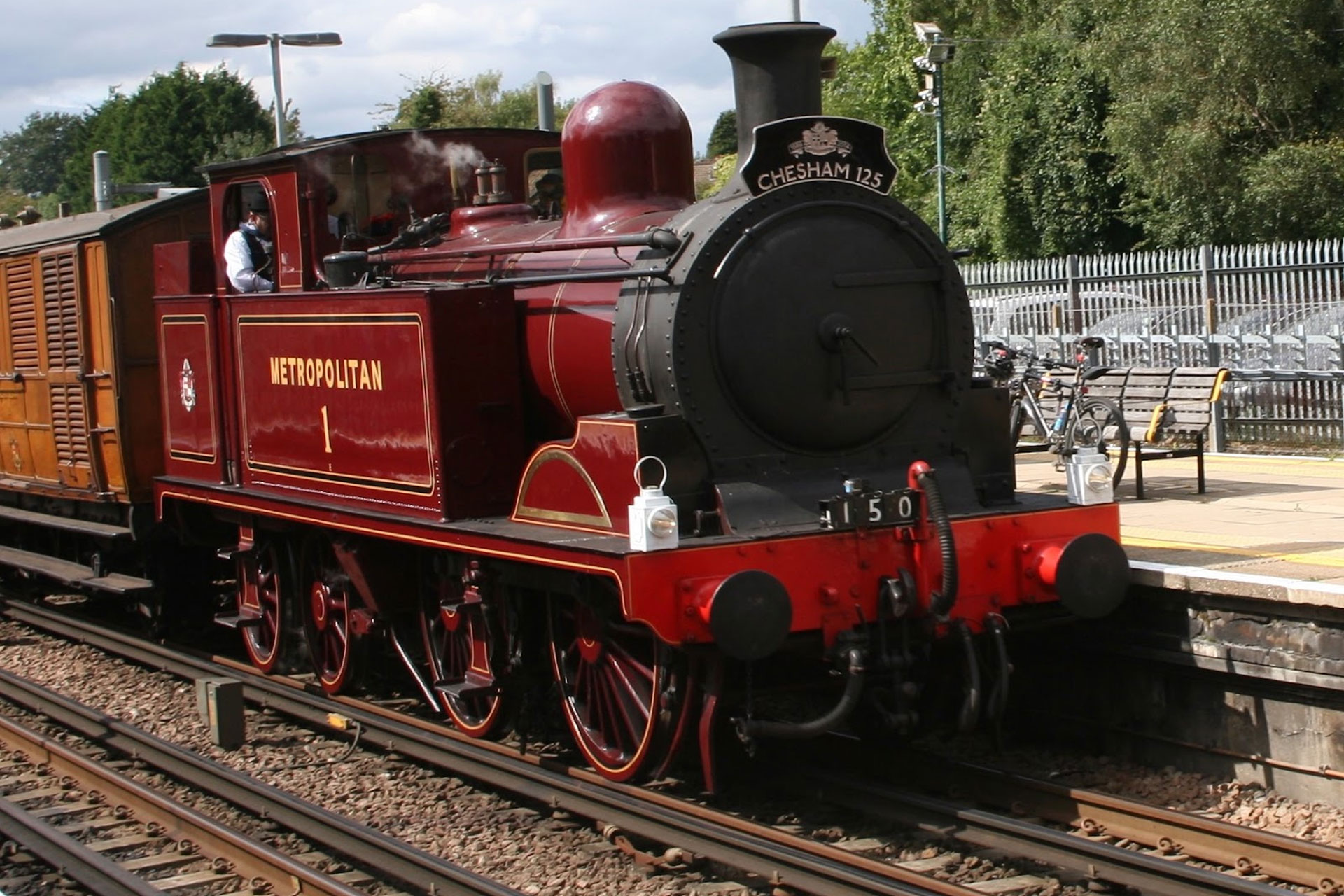
Dr Mark Pegg discusses how one railway line changed London social and economic life by connecting city workers with the Chiltern Hills and beyond. The talk explores the civil, mechanical and electrical engineering challenges of the steam powered and electric rolling stock, that enabled trains to carry passengers and goods on steep gradients from London to Buckinghamshire while supplying the rapidly growing London market with coal, fresh food and dry goods.
Metroland was made more famous by Sir John Betjeman who wittily observed the change the railway brought to new London suburbs that grew up to provide homes in a rural environment with smoke-free air for London’s rapidly growing population, particularly the workers who commuted daily into the heart of the City.
The phrase ‘Live in Metroland’ was coined by the Metropolitan Railway to promote the line in 1915 used until it became part of the London Transport Board in 1933.
Opened in 1863, the Metropolitan Line from Baker Street to Farringdon was the first underground railway in the world, extending to Aldgate in 1876. At first, it was strictly an inner-city line, extension to Aylesbury in 1898 transformed the line into rural Buckinghamshire, also sharing tracks with the Great Central’s ‘London Extension’ which ran into London Marylebone. Electrification went live to Rickmansworth in 1925 and later to Amersham and Chesham in 1961. Metroland is still changing today with more homes and the construction of HS2 and East-West the revival of the old Oxford to Cambridge ‘Varsity’ line.
About the Speaker
Dr Mark Pegg read history at Oxford University where his published doctoral thesis was British Broadcasting and Society 1918-1939.
He worked in the UK coal mining industry in deep mines and headquarters where he was the Chairman’s personal assistant and also researched the modern coal mining history. After working as a management consultant, Mark became a Director of a Business School and CEO of the Leadership Foundation for Higher Education. He has extensive experience in the UK, Europe, Middle East, Far East and Africa with clients including central governments, Rolls-Royce plc and the UK Senior Civil Service.
Mark is a Companion of the Chartered Management Institute and Fellow of the Chartered Institute of Personnel and Development.