

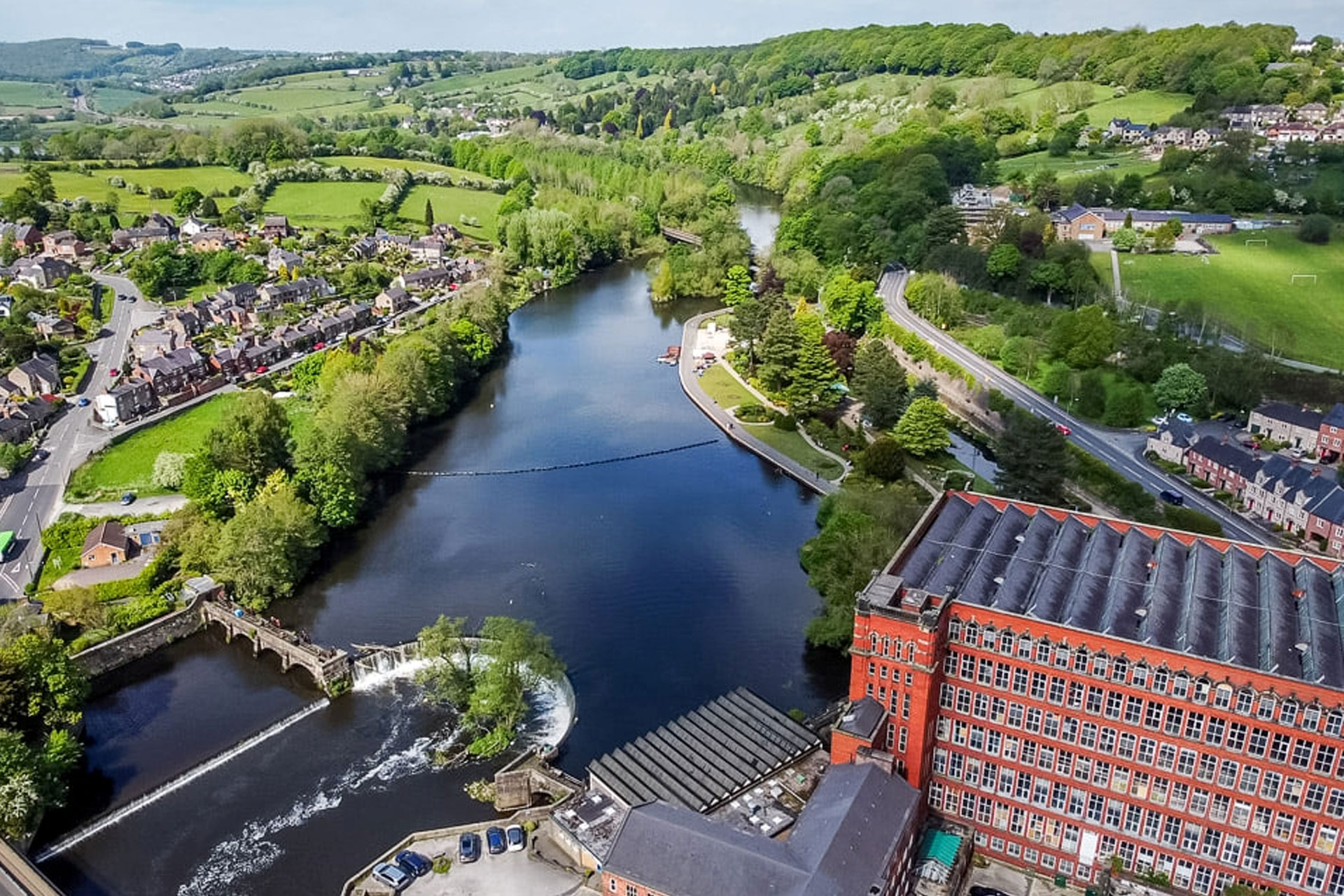
‘An Extraordinary 250 Years of Waterpower at the Strutts’ Belper Mills’ by Ian Jackson
October 14 @ 6:00 pm - 7:30 pm
Image Credit: Reproduced with permission of Jim Bell
This event is both an in-person and on-line event. No need to register – just come along or click this zoom link to join on-line.
Famed for its innovative ‘fire-proof’ iron-framed cotton mill, the Belper Mill complex in Derbyshire also incorporated innovative developments in waterpower.
William Strutt’s improvements of the waterwheel, waterpower control and management of the River Derwent, enabled the mass manufacturing of textile thread at the complex, which today sits at the heart of the Derwent Valley Mills World Heritage Site. Recent, award-winning research has uncovered examples of responsible stewardship of the rivers by Georgian proprietors of the mills along Britain’s waterways, including the management of floods and distribution of salmon.
The use of water to generate hydroelectric power, c.1900, encouraged the new owners of the Belper Mills, the Lancashire based English Sewing Cotton Company, to invest in their Derbyshire Derwent Valley businesses. Whilst most industrial sites on the Derwent stopped producing hydroelectric power in the mid-20th century, choosing instead to connect to the coal-fired national grid, the Belper site continued to invest in new hydro turbines.
The 18th century weir, mill leats and wheel pits are still in use today (harnessing the power of the river, almost continuously, for 250 years), supplying the national grid with renewable energy.
Other sites across Britain offer similar opportunities, not only to generate renewable energy, but with reinstatement of floodgates and sluices, to improve our stewardship of our waterways.
About the Speaker
Ian Jackson is a Chartered Mechanical Engineer who has worked in multinational manufacturing businesses for 35 years, latterly as an independent ESOS Lead Assessor, and now as a waterpower researcher.
In 2012, he set up Amber and Derwent Valley Community Energy to try to reinstate Hydroelectric Power (HEP) at a former industrial site, at the heart of the Derwent Valley Mills World Heritage Site. In 2014, it was a feasible project but changes in government support and EA requirements halted the project in 2018.
Living in the Derwent Valley Mills World Heritage Site and trying to identify HEP opportunities, led to his research into the historic use of waterpower, the primary energy source for the early industrial revolution. Seeing the untapped HEP resource in the valley, and his role on the strategy board of the Derwent Valley Mills World Heritage Site, led to an approach to the University of Nottingham.
Ian started a full time PhD in 2020, titled ‘Climate Change mitigation: Learning from the past to unlock the hydropower potential of the Derbyshire Derwent catchment’, graduating in July 2025. The award-winning thesis (Association for Industrial Archaeology dissertation award) is available for download on the Derwent Valley Mills World Heritage Site